The Physiological Architecture of Follicular Waves
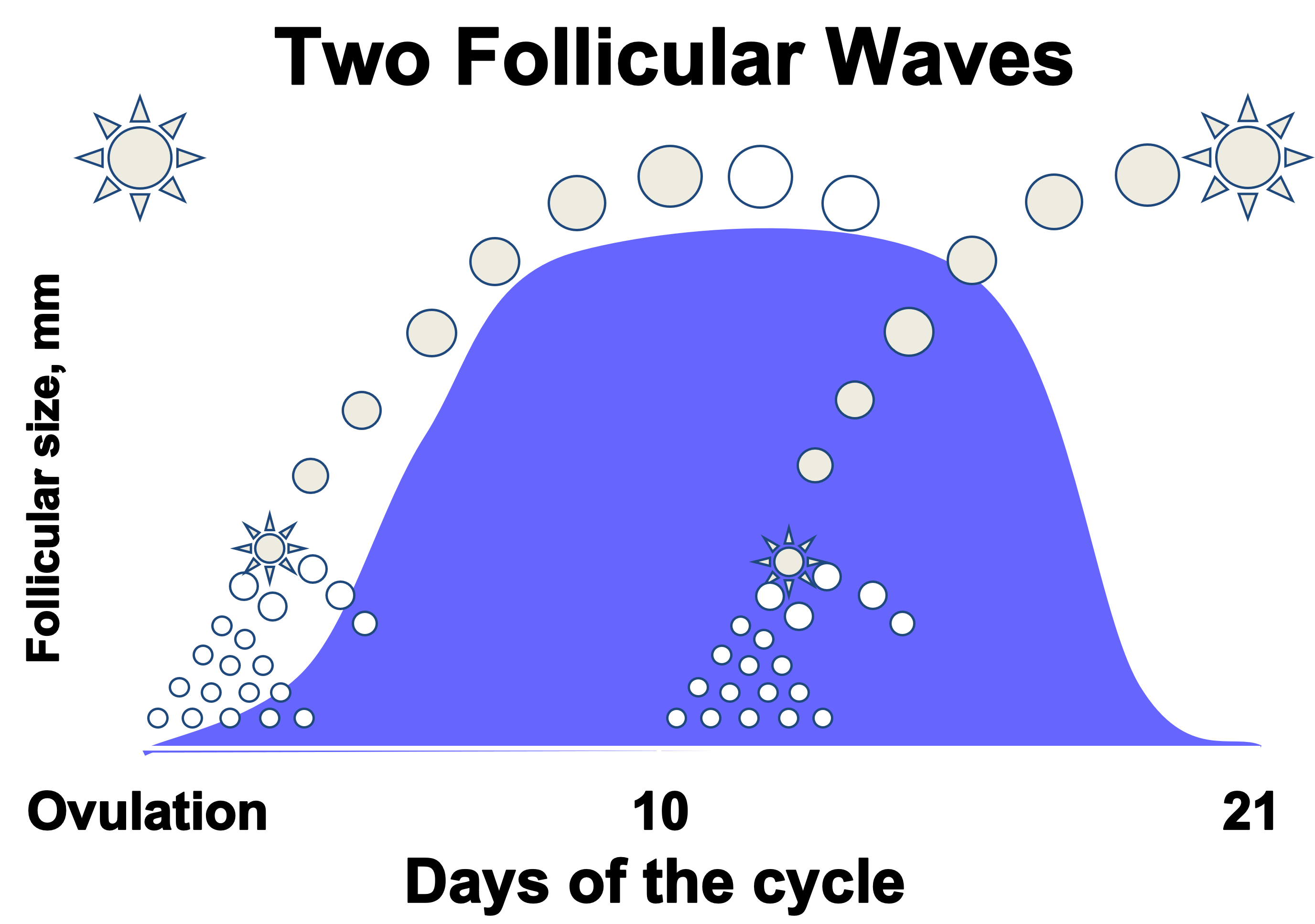
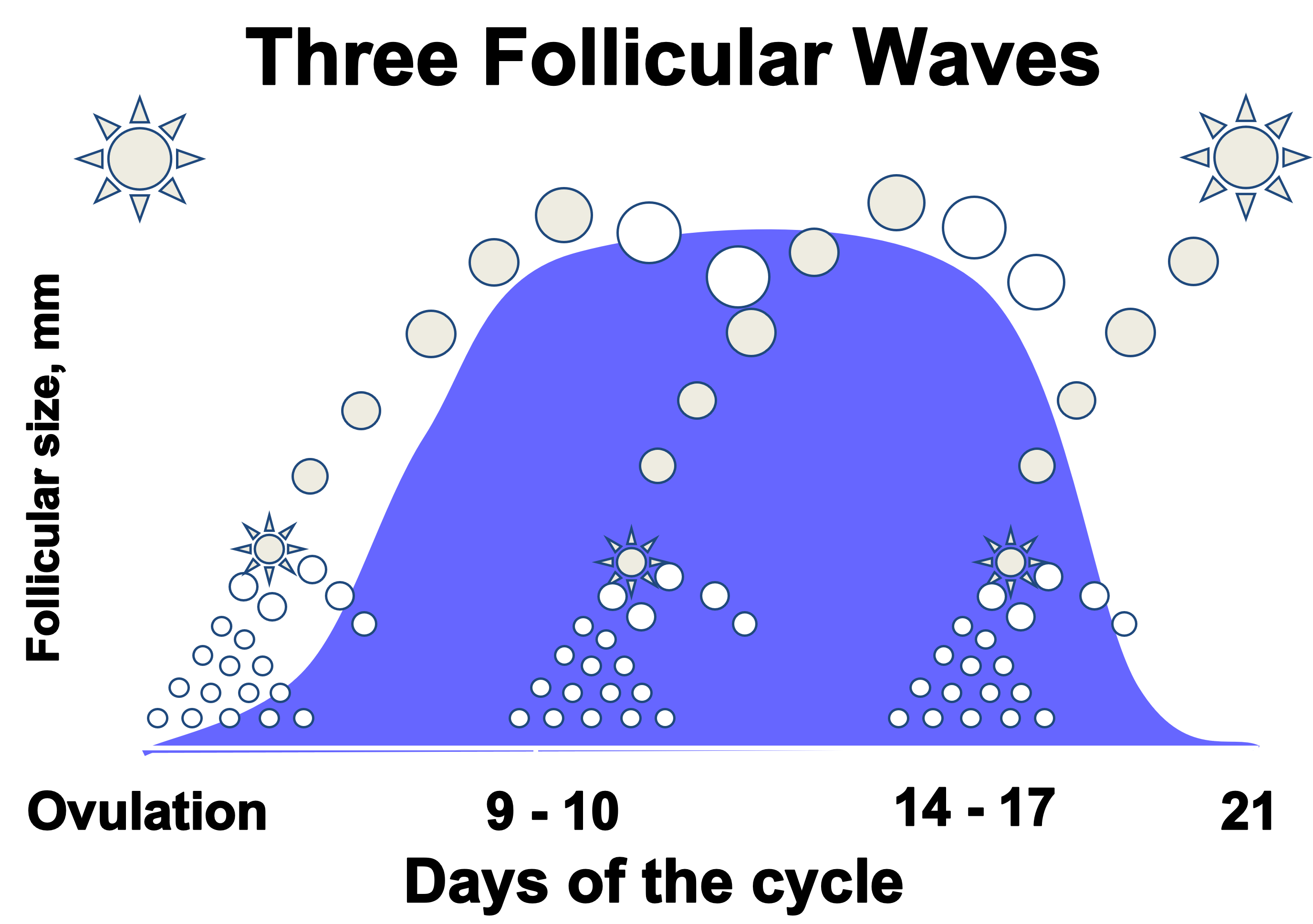
The reproductive success of dairy cattle is governed by the estrous cycle, a complex sequence of endocrine and ovarian events. Central to this is follicular growth, which occurs in distinct wave-like patterns. More than 95% of bovine estrous cycles are composed of either two or three follicular waves, a distribution that is a direct physiological consequence of the interplay between follicular development and the lifespan of the corpus luteum. The illustrations below show the fundamental difference between these two dominant patterns.
Two Follicular Waves
Three Follicular Waves
The Follicular Wave Process: A Symphony of Growth and Regression
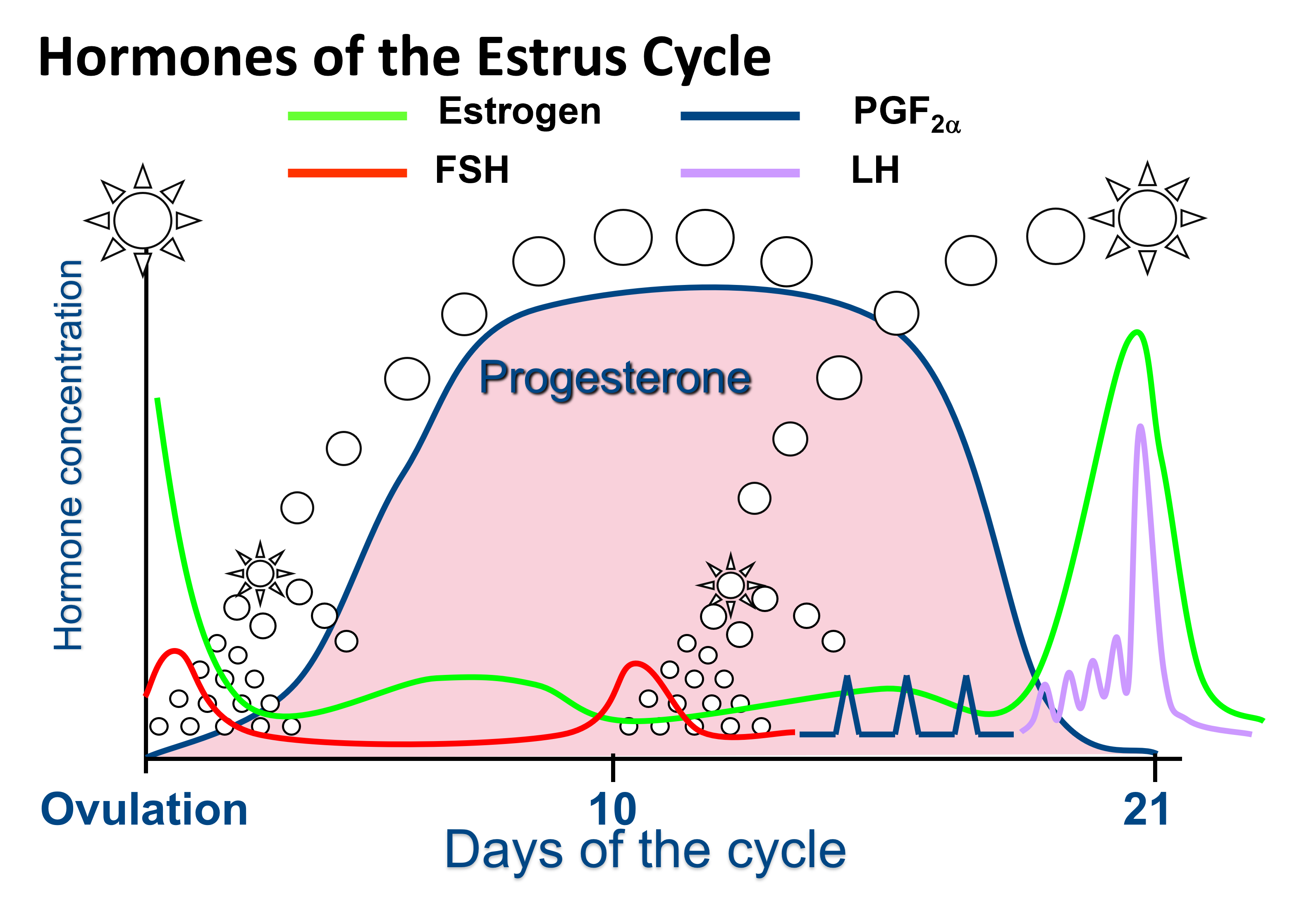
Each follicular wave is a dynamic process comprising four distinct stages: recruitment, selection, dominance, and either atresia or ovulation. This process is governed by the hypothalamic-pituitary-ovarian (HPO) axis, a sophisticated system of hormones and feedback loops. Click the tabs to explore the key stages.
Recruitment
Triggered by a transient surge in Follicle-Stimulating Hormone (FSH), a cohort of 8 to 41 small (≥3 mm) antral follicles are stimulated to begin a phase of accelerated growth.
Defining the Patterns: Two vs. Three Waves
The number of follicular waves in a cycle is determined by the timing between the dominant follicle's lifespan and the regression of the corpus luteum (luteolysis). Any factor that delays luteolysis or causes the second-wave DF to fail prematurely will mechanistically shift the system from two to three waves.
| Characteristic | Two-Wave Cycle | Three-Wave Cycle |
|---|---|---|
| Typical Estrous Cycle Length | 19–21 days | 22–24 days |
| Wave 2 Emergence | Day 9–11 | Day 8–9 |
| Wave 3 Emergence | N/A | Day 15–16 |
| Fate of Wave 2 DF | Ovulation | Atresia |
| Ovulatory Wave | Wave 2 | Wave 3 |
| Typical Day of Luteolysis | ~Day 16–17 | ~Day 19 |
| Age of Ovulatory Follicle | Older | Younger |
| Associated Pregnancy Rate | Lower (e.g., 63%) | Higher (e.g., 81%) |
The Fertility Question: Is a Three-Wave Cycle Superior?
A critical finding is that estrous cycles with three follicular waves are associated with higher fertility. The prevailing "younger oocyte" hypothesis suggests the ovulatory follicle in a two-wave cycle is chronologically older and persists under suboptimal LH conditions, compromising oocyte quality. In contrast, the ovulatory follicle of a three-wave cycle is younger and develops more rapidly in a favorable endocrine environment, yielding a higher quality oocyte and a more viable embryo. For seasonal systems with a tight breeding window, this improved conception rate per service is highly advantageous.
The Metabolic Over-Rider: Nutrition and Management Systems
While the HPO axis provides the blueprint for follicular dynamics, the animal's metabolic state acts as a powerful over-rider. Lactation and the feeding system can profoundly alter the hormonal cascades, directly influencing which wave pattern emerges.
The Energetic Cost of Lactation
The transition to lactation creates an unavoidable period of Negative Energy Balance (NEBAL), as nutrient demand for milk synthesis outstrips intake. This metabolic stress is the central mechanism of NEBAL-induced infertility. It disrupts GnRH/LH pulsatility, lowers permissive hormones like insulin and IGF-I, and elevates compounds like NEFA and ketones that can be toxic to follicles and oocytes. This hostile environment often leads to the failure (atresia) of early dominant follicles, delaying the first postpartum ovulation and favoring the emergence of three-wave cycles.
| Parameter | State in Energy Sufficiency | State during NEBAL | Consequence for Follicular Development |
|---|---|---|---|
| GnRH/LH Pulse Frequency | High / Frequent | Low / Infrequent | Insufficient LH support for DF maturation; leads to atresia. |
| Blood Glucose / Insulin | Normal | Low | Reduces ovarian responsiveness to gonadotropins. |
| Blood IGF-I | Normal | Low | Impairs follicle growth and steroidogenesis. |
| Blood NEFA / Ketones | Low | High | Direct toxic effects on oocytes and granulosa cells. |
| Fate of Early Postpartum DF | Ovulation | Atresia or Cystic | Delayed resumption of ovulatory cycles. |
Conclusion and Management Recommendations
Summary of Findings
- The Definitive Answer: For lactating dairy cows in a seasonal grazing system, the three-wave follicular pattern is the most common and physiologically predictable outcome.
- The Causal Pathway: This prevalence is a direct consequence of metabolic stress from high lactational demand combined with an energy-limiting pasture diet.
- The Fertility Advantage: This three-wave pattern is associated with higher pregnancy rates, attributed to the ovulation of a younger, more developmentally competent oocyte.
Strategic Herd Management
- Acknowledge the Three-Wave Pattern as the Norm: An average estrous cycle of 22–24 days in a grazing herd is not a problem; it is indicative of a normal, and likely more fertile, three-wave pattern.
- Prioritize Body Condition Score (BCS) Management: Aim to calve cows in a moderate BCS and minimize condition loss postpartum to mitigate the severe effects of NEBAL.
- Implement Strategic Energy Supplementation: Providing targeted energy supplements during critical periods can lessen the depth of NEBAL and improve conception rates.
- Balance High-Protein Pasture: Balance lush forages with fiber and fermentable carbohydrates to improve rumen function and reduce metabolic load.
Utilize Hormonal Synchronization Programs for Targeted Breeding
Synchronization programs are powerful tools to overcome reproductive variability. They use hormones to take control of the HPO axis, enabling Fixed-Time AI (FTAI), which eliminates heat detection, ensures 100% submission rates, and helps induce cyclicity in non-cycling cows.
Pro Tip
Using a presynch protocol is an effective way to improve program success. It groups cows to the ideal cycle stage, which dramatically improves the ovulatory response to the first GnRH injection and boosts overall conception rates.
Example: Presynch with Ovsynch
Protocol Choice: 5-Day vs. 7-Day Programs and Wave Dynamics
The length of the synchronization program is designed to manipulate the follicular wave for optimal fertility. The choice between a 5-day and a 7-day protocol aligns with the underlying wave patterns in the herd.
-
7-Day Programs (e.g., Standard Ovsynch):
These protocols are designed to cause follicular turnover. The first GnRH shot ovulates or luteinizes the current dominant follicle, triggering the emergence of a brand new follicular wave. The program then manages this new, young wave, timing the final ovulation for FTAI. This is robust and effective for resetting the cycle, especially in herds with more 2-wave cows.
-
5-Day Programs (e.g., 5-day CIDR-Synch):
These shorter protocols are designed to manage the existing dominant follicle. The goal is to catch a recently selected, growing follicle and control it towards ovulation without waiting for a full wave turnover. This is particularly effective in herds with a high proportion of 3-wave cycles, as these cows naturally produce younger dominant follicles more frequently. The inclusion of a CIDR (progesterone) is crucial for success, as it prevents premature ovulation and boosts fertility, especially in metabolically stressed or non-cycling cows who are already predisposed to 3-wave patterns.
Incidence Explorer
Use the filters below to visualize how follicular wave patterns can shift based on various factors. The data represents typical findings from multiple studies and reflects the principles discussed in this guide.
Select filters to view a summary of the data.